

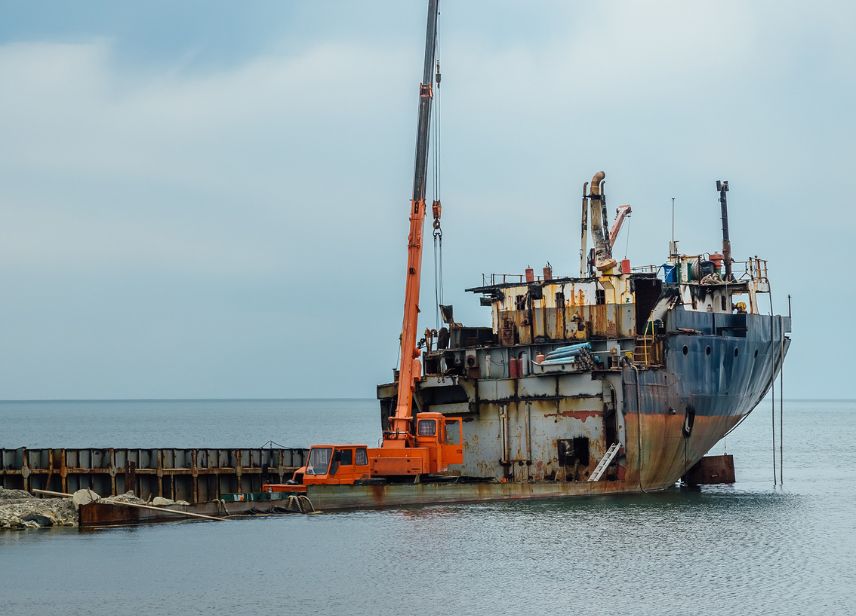
Sustainable Ship Recycling Challenges Amid EU Capacity Constraints
Despite growing momentum toward greener shipping, the industry continues to face a critical bottleneck: limited capacity for sustainable ship recycling.
While some yards have made significant strides in upgrading their standards, many still carry an unfortunate legacy of safety incidents and environmental harm. At the same time, shipowners face increasing pressure to ensure responsible recycling—often with limited viable options.
South Asia Still Dominates Global Ship Recycling
South Asian shipbreaking yards remain central to the global recycling ecosystem.
According to NGO Shipbreaking Platform:
- 583 vessels (76%) of 763 ocean-going ships and offshore units were dismantled in India, Bangladesh, and Pakistan last year
- This marks a rise from 446 vessels in 2020
These yards continue to handle over two-thirds of global ship recycling volume, largely due to their ability to process large vessels and offer competitive pricing.
However, this dominance comes with challenges.
While some facilities have upgraded operations, others still struggle with:
- Worker safety concerns
- Toxic pollution
- Inconsistent regulatory enforcement
The EU Capacity Constraint Problem
A key issue driving this imbalance is the lack of capacity at EU-compliant recycling facilities.
Under the EU Ship Recycling Regulation (EUSRR):
- EU-flagged vessels must be recycled at approved yards
- These yards are limited in number and often near capacity
- Many are not equipped or willing to handle large vessels
As a result, shipowners are left with few alternatives.
“The fact is, while these yards are still largely unregulated, there are few alternatives for shipowners due to a lack of available capacity at EU-compliant facilities for this volume of large vessels. So the onus is on owners to take responsibility for sustainable recycling at South Asian yards,”
— Rakesh Bhargava, CEO, Sea Sentinels
Why South Asian Yards Remain Competitive
Despite regulatory and reputational challenges, South Asian yards continue to attract business due to clear economic advantages:
- Higher steel resale value
- Lower labour and operational costs
- Capacity for large vessels (tankers, bulk carriers)
As noted by Danish Shipping:
“This is how the global recycling market presently functions… with a huge difference in standards as ships are sent to sub-standard facilities in South Asia,”
— Maria Skipper Schwenn
The Push Toward Global Standards
The Hong Kong Convention (HKC) aims to establish a global framework for safe and environmentally sound ship recycling, including:
- Proper handling of hazardous materials
- Standardised safety and environmental practices
However, until it is fully enforced globally, regulatory fragmentation persists.
In the meantime:
- The EUSRR governs EU-flagged vessels
- South Asian yards operate under varying levels of compliance
- A global level playing field remains elusive
Capacity Reality: Limited Options for Large Ships
Industry data shows that many EU-approved yards:
- Operate near full capacity
- Prioritise higher-margin activities such as repairs or offshore recycling
- Avoid large vessel dismantling due to cost and complexity
This leaves South Asia, China, and Turkey as the primary destinations for large-scale ship recycling.
Leading by Example: Responsible Recycling in Practice
Some industry leaders are already driving change.
Companies like Maersk have:
- Implemented recycling standards exceeding HKC requirements
- Partnered with yards in Alang, India to upgrade facilities
- Achieved verified compliance through hands-on engagement
Additionally, two Alang yards have provisionally qualified for inclusion on the EU-approved list, pending further improvements—signaling progress in the region.
The Risk of Greenwashing
While many shipowners have adopted sustainability policies, implementation gaps remain.
“In some cases, this has led to greenwashing, with a gap between policy and execution,”
— Rakesh Bhargava
Challenges include:
- Continued safety incidents
- Wide variation in yard standards
- Claims of compliance without consistent verification
The Role of Due Diligence and Oversight
Sustainable ship recycling requires more than selecting a compliant yard.
Shipowners must:
- Conduct thorough yard vetting and audits
- Implement contractual safeguards
- Ensure independent, on-site supervision
- Maintain transparent ESG reporting
Bimco’s Recyclecon contract is one example of a framework designed to enforce responsible recycling practices.
Addressing Risk in the Value Chain
A common industry practice involves:
- Cash buyers acquiring vessels
- Reflagging under flags of convenience
- Selling to non-compliant yards
While profitable, this exposes stakeholders to:
- Legal risks
- Financial liabilities
- Reputational damage
Recent court cases in Europe have shown that both shipowners and cash buyers can be held accountable for irresponsible recycling practices.
Conclusion: Responsibility Cannot Be Outsourced
With EU recycling capacity constrained, shipowners cannot rely solely on regulation to ensure sustainability.
The responsibility lies with:
- Shipowners
- Cash buyers
- Industry stakeholders
To drive meaningful change, the industry must:
- Invest in upgrading existing high-capacity yards
- Strengthen oversight and enforcement
- Align economic incentives with sustainable practices
Only through proactive engagement can the gap between policy and practice be closed.
Contact
Rakesh Bhargava
CEO, Sea Sentinels
📧 rakesh.bhargava@sea-sentinels.com
📞 +60 12 215 0137