
Inventory of Hazardous Materials (IHM): How an IHM Is Prepared and Certified
Previously, we explored what an Inventory of Hazardous Materials (IHM) is, why it was introduced, and why it has become an essential requirement for responsible ship management.
However, the Inventory of Hazardous Materials preparation involves much more than compiling a list of hazardous materials. Every vessel has a unique construction history, maintenance record, and equipment configuration, making each survey a detailed technical exercise. From reviewing drawings and supplier documentation to conducting onboard inspections and laboratory testing, every step contributes to producing an accurate inventory that supports safe operations and regulatory compliance.
In this follow-up article, we explain how an IHM is prepared, the common hazardous materials surveyors look for, and how the completed inventory is verified and certified.
Understanding the Three Parts of an IHM
An IHM is divided into three distinct sections, each serving a different purpose during a vessel’s lifecycle. Together, these sections provide a complete picture of the hazardous materials and waste associated with a ship, ensuring they can be safely managed during operation, maintenance, and eventual recycling.
While all three parts contribute to safe and environmentally responsible ship recycling, Part I is the only section that must be maintained throughout the vessel’s operational life, as it identifies hazardous materials permanently incorporated into the ship. Parts II and III are typically completed when the ship is being prepared for recycling.
Part I: Hazardous Materials Onboard
Typical hazardous materials in this category documented include the following:
- Asbestos used in insulation, gaskets and fire protection
- PCBs in transformers, capacitors and electrical equipment
- Ozone-Depleting Substances (ODS) contained in refrigeration and air-conditioning systems
- Heavy metals such as lead, mercury and cadmium in paints, batteries and instrumentation
- Radioactive materials used in specialized equipment
- Organotin compounds such as tributyltin (TBT) in anti-fouling coatings
- Certain brominated flame retardants and other hazardous compounds identified under IMO guidelines
For each hazardous material, the material type, estimated quantity, location on board, and supporting evidence or sampling records, where applicable, are logged in the IHM. This enables surveyors, maintenance teams, and recycling facilities to quickly identify areas requiring special handling or protective measures.
When Should Part I Be Updated?
Every significant change involving hazardous materials should trigger an update, including machinery replacements, new equipment installations, major retrofits, structural modifications, HVAC system replacements, electrical upgrades, and drydock projects.
Part II: Operationally Generated Wastes
While Part I focuses on hazardous materials built into the vessel itself, Part II records the operational waste that accumulates during normal ship operations. These wastes are generated by the vessel’s day-to-day activities and must be properly documented before recycling begins, so they can be removed and disposed of safely.
Unlike Part I, Part II is usually prepared shortly before the vessel is delivered to a recycling facility. Typical operational wastes recorded in Part II include sludge from fuel and lubrication systems; bilge water and bilge residues; waste lubricating oils; engine room residues; oily rags and absorbents; sewage residues; garbage; and other regulated waste streams and cargo residues, where applicable.
Without a complete Part II inventory, additional inspections and waste identification may be required, delaying recycling operations and increasing costs.
Part III: Documenting Remaining Stores Onboard
Consumable products and stores remaining on board when a vessel is being prepared for recycling are captured in the final section. Although such materials are not permanently incorporated into the vessel, many contain hazardous substances that require careful handling and disposal.
Typical stores include paints and coatings, solvents and thinners, cleaning chemicals, lubricants and greases, hydraulic fluids, fuel oils, refrigerants, gas cylinders, firefighting chemicals, batteries awaiting replacement, and spare chemicals and maintenance products.
Like Part II, Part III is normally prepared immediately before recycling rather than maintained throughout the ship’s operational life. The inventory identifies the approximate quantities and storage locations of these materials.
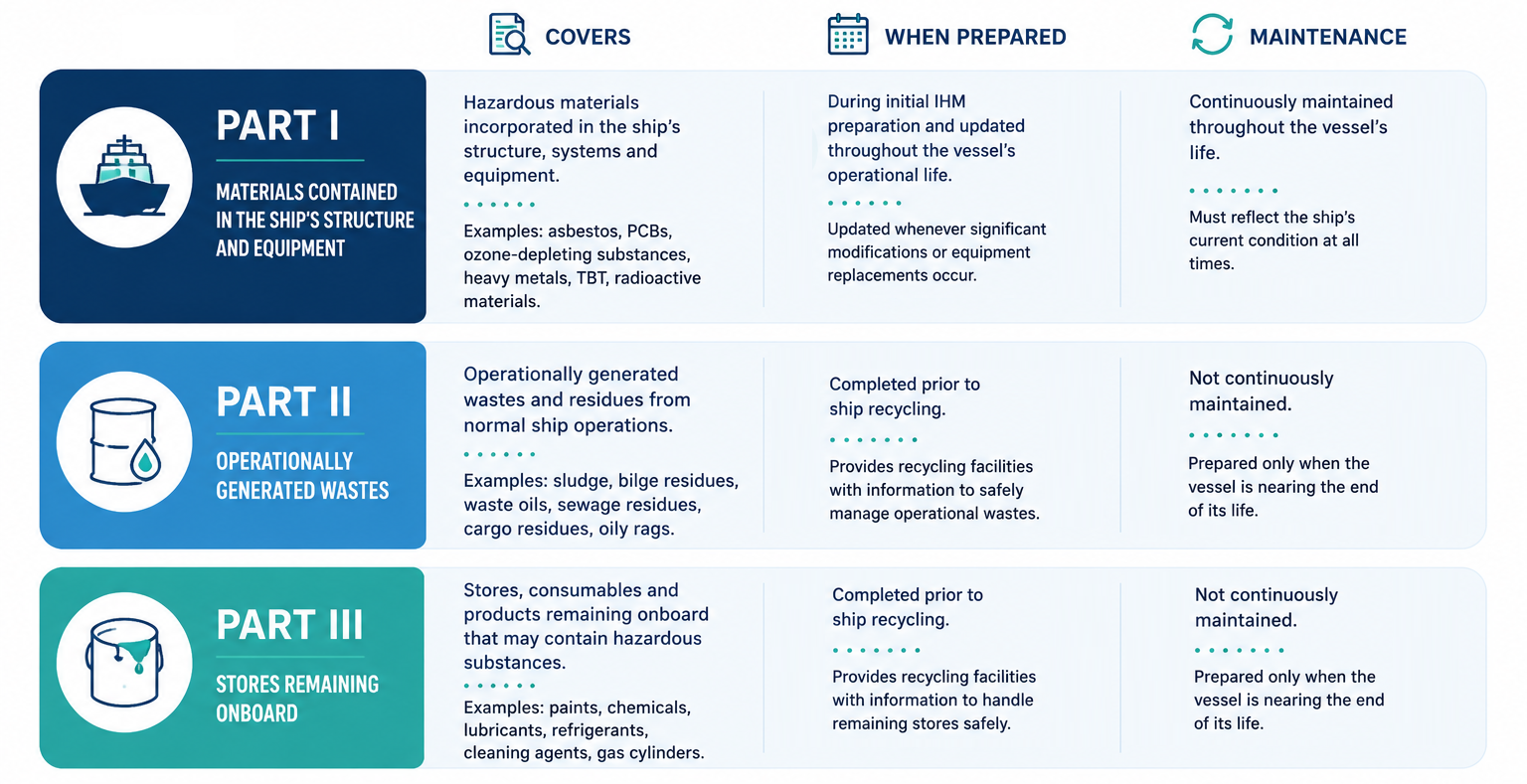
Fig. 1: Different Parts of an IHM
Preparing an Inventory of Hazardous Materials
Preparing an Inventory of Hazardous Materials (IHM) is a structured process that combines technical documentation, onboard inspections, representative sampling, and laboratory analysis to produce an accurate record of hazardous substances onboard. Understanding how the process works helps shipowners appreciate the importance of a thorough IHM survey and its role in achieving ongoing regulatory compliance.
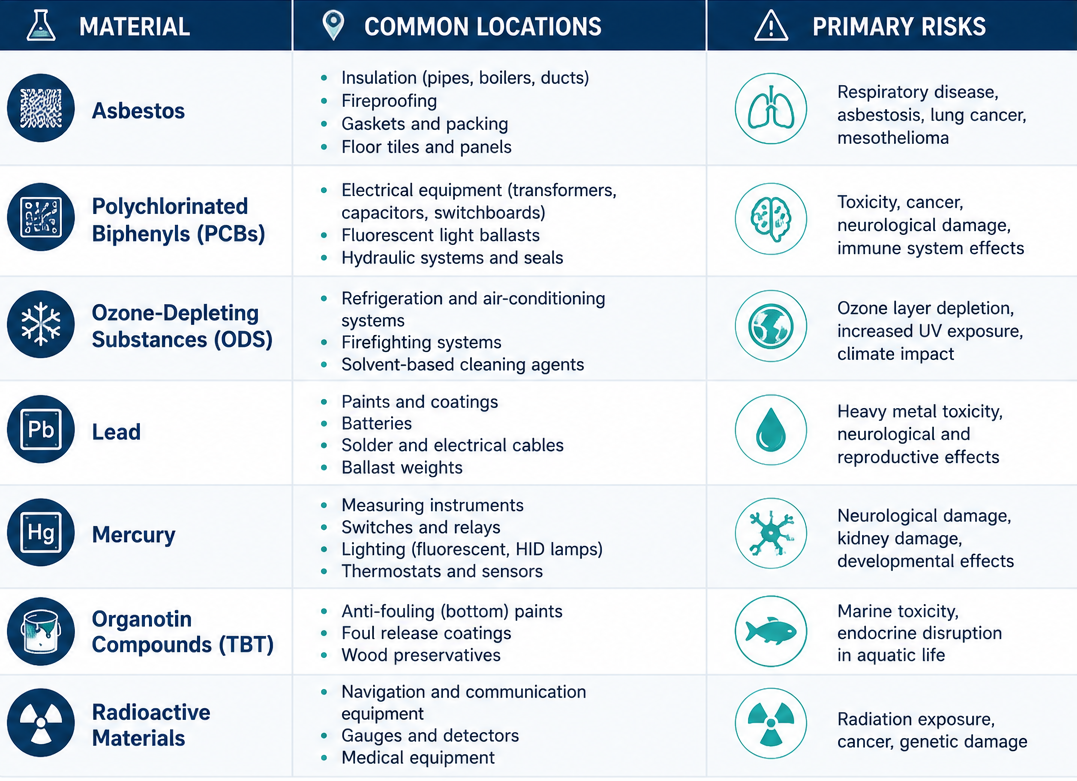
Fig. 2: Common Hazardous Materials Found on Ships
Modern vessels may contain a wide range of hazardous materials that require careful identification, handling, and disposal. Understanding where these substances are typically found helps surveyors prepare an accurate IHM and enables shipowners to manage maintenance, repairs, and eventual recycling more safely and efficiently.
While newer vessels are built under increasingly stringent material controls, older ships may still contain hazardous substances that require careful identification, handling, and documentation during an IHM survey.
How an IHM survey is conducted
Preparing an IHM is a structured, evidence-based process that combines technical documentation, onboard inspections, laboratory testing, and regulatory verification. Every vessel is unique, particularly older ships that may have undergone multiple repairs, retrofits, or equipment replacements over decades of operation. Producing an accurate IHM requires more than completing a checklist. It demands a systematic investigation of the vessel’s construction, maintenance history, and current condition.
A professionally conducted IHM survey follows internationally recognized guidelines issued by the IMO. It is typically carried out in six key stages by qualified surveyors working closely with the vessel’s crew, technical managers, and, where applicable, classification societies.
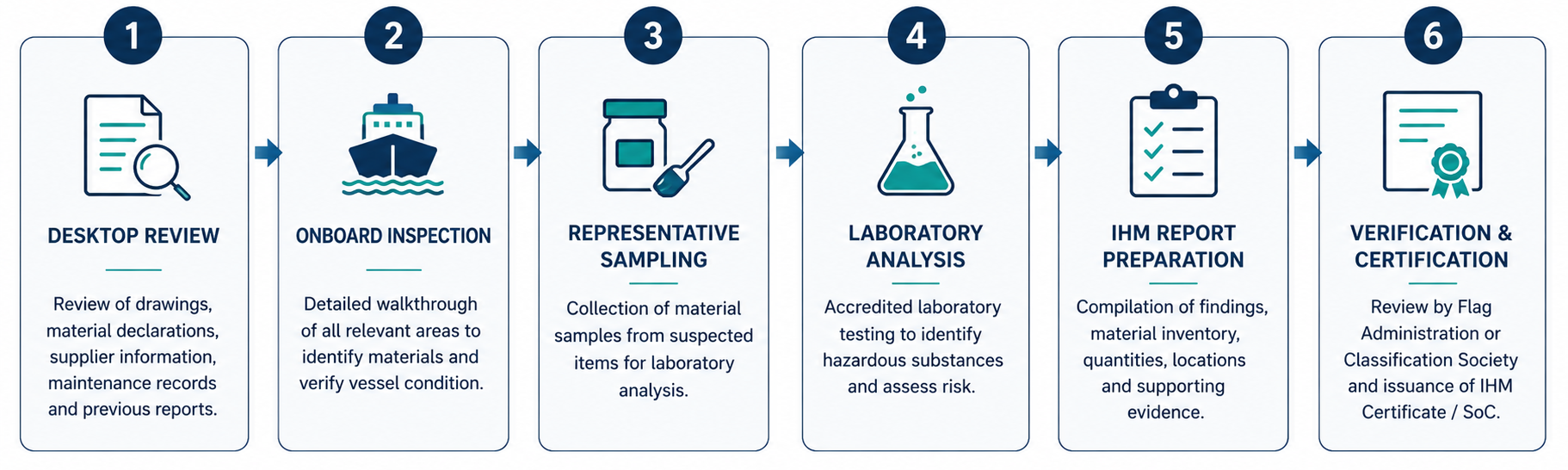
Fig. 3: How an IHM Survey Is Conducted
Step 1: Desktop Review of Technical Documentation
Every IHM project begins with a comprehensive review of available documentation. This allows surveyors to identify materials that are likely to contain hazardous substances and determine where further investigation may be required during the onboard survey.
Typical documents include:
- General Arrangement (GA) drawings
- Machinery and equipment lists
- Material Declarations (MDs)
- Supplier’s Declarations of Conformity (SDoCs)
- Previous IHM reports
- Drydock and retrofit records
- Class survey reports
This desktop assessment helps surveyors identify equipment that may contain hazardous materials and develop a vessel-specific inspection plan before arriving onboard. Good documentation can significantly improve survey efficiency. However, documentation for older vessels is often incomplete or unavailable. In these cases, additional onboard investigation and laboratory testing become essential.
Step 2: Onboard Inspection
During the IHM survey, qualified surveyors conduct a detailed physical inspection onboard. Rather than inspecting only obvious areas, the survey covers virtually every part of the vessel where hazardous materials may reasonably be present.
Typical inspection areas include the following:
- Machinery Spaces – engine rooms, boilers, exhaust systems, pumps, compressors, pipe insulation, valve insulation, and gaskets. These areas frequently contain asbestos, insulation materials, and older equipment that may contain hazardous substances.
- Accommodation Areas – wall panels, ceiling materials, floor coverings, fire doors, insulation, and air-conditioning systems. Many older accommodation spaces contain asbestos-containing products or materials incorporating hazardous chemicals.
- Electrical Systems – main switchboards, transformers, capacitors, electrical cabinets, cable insulation, and lighting equipment. Older electrical equipment may contain PCBs or heavy metals requiring specialized handling.
- Cargo Areas – cargo holds, cargo piping, pump rooms, tank coatings, and cargo handling equipment
- Deck Equipment – cranes, winches, anchoring equipment, lifeboats, firefighting systems, and refrigeration equipment. These systems may contain hazardous coatings, lubricants, or ozone-depleting substances.
Step 3: Representative Sampling
It is not always possible to determine whether a material contains hazardous substances through visual inspection alone. If reliable documentation is unavailable, surveyors collect carefully selected representative samples for laboratory analysis. Such samples include paint coatings, pipe insulation, bulkhead insulation, floor tiles, ceiling panels, adhesives, sealants, gaskets, packing materials, cable insulation, and fireproofing materials.
Making assumptions without supporting evidence can compromise the accuracy of the IHM and increase the likelihood of additional surveys, project delays, or compliance issues later in the vessel’s lifecycle. Hence, sampling follows recognized international procedures designed to minimize disruption to vessel operations while ensuring representative coverage of potential hazardous materials.
Step 4: Laboratory Analysis
Collected samples are submitted for laboratory testing to confirm whether hazardous substances are present and, where applicable, determine their concentration. Common analyses include detection of asbestos fibers; PCBs; heavy metals such as lead, mercury, and cadmium; ozone-depleting substances; organotin compounds; and other hazardous substances listed under IMO guidelines.
Laboratory reports provide objective evidence that supports the final IHM and reduce uncertainty when documentation alone is insufficient. Using internationally recognized laboratories provides traceable evidence should the inventory be reviewed by classification societies, flag administrations, or regulatory authorities.
Step 5: Preparation of the IHM Report
Once documentation reviews, onboard inspections, and laboratory analyses are complete, surveyors prepare the formal IHM.
Typical contents include the following:
- Hazardous material identification
- Estimated quantities
- Locations onboard
- Laboratory results
- Photographic evidence
- Material Declarations
- Sampling records
It is organized according to the IMO guidelines, allowing authorities, shipyards, and recycling facilities to interpret the information easily.
A well-prepared IHM becomes a valuable operational document that supports maintenance planning, drydock projects, equipment replacement, and eventual ship recycling throughout the vessel’s lifecycle.
Step 6: Verification and Certification
Following its completion, the IHM may be reviewed and verified by the vessel’s Classification Society or Flag Administration, depending on the applicable regulatory framework.
The verification may include a review of the survey methodology, an assessment of supporting documentation, an examination of laboratory reports, confirmation that the inventory complies with IMO guidelines, and verification of updates and maintenance procedures. If any deficiencies are identified, corrective actions must be completed.
Once all verification requirements have been satisfactorily completed, the appropriate certificate or Statement of Compliance (SoC) may be issued by the Flag Administration or an authorized Classification Society.
IHM verification and certification
What Is an IHM Certificate?
Once an inventory of hazardous materials has been prepared, it must be reviewed and verified in accordance with applicable international regulations before certification can be issued. Depending on the vessel’s flag administration and regulatory framework, this may take the form of an IHM certificate or a statement of compliance (SoC).
The certificate confirms that the vessel’s IHM has been prepared using recognized survey methodologies and complies with the requirements of the Hong Kong International Convention (HKC) and, where applicable, the European Ship Recycling Regulation (EUSSR). While qualified surveyors prepare the inventory itself, the certificate is issued or endorsed by the vessel’s flag administration or an authorized classification society acting on its behalf.
In addition to the certificate or SoC, shipowners may receive supporting documentation, such as survey reports, laboratory results, and Classification Society endorsements, which provide independent verification that the IHM has been prepared in accordance with recognized international standards.
Why Certification Matters
Obtaining an IHM certificate is more than a regulatory milestone. It assures that hazardous materials onboard have been systematically identified, documented, and managed throughout the vessel. This gives shipowners, technical managers, and recycling facilities confidence that the inventory can be relied upon for maintenance planning, statutory inspections, and end-of-life recycling.
A professionally conducted IHM survey and subsequent certification also help reduce operational uncertainty, support safer maintenance activities, and minimize the risk of delays during vessel sales, conversions, or recycling projects. Ultimately, certification demonstrates a commitment to responsible ship management and ongoing IHM compliance throughout the vessel’s lifecycle.
Looking Ahead: Maintaining an IHM Throughout Its Lifecycle
Preparing and certifying an Inventory of Hazardous Materials is only the beginning. To remain compliant, Part I must be maintained throughout the vessel’s operational life whenever modifications involving hazardous materials occur.
In the final series of IHM articles, we’ll explore the following:
- When an IHM should be updated
- Lifecycle maintenance requirements
- The risks of an outdated or inaccurate IHM
- Best practices for maintaining compliance
- How to choose an experienced IHM partner
- Frequently asked questions
The concluding article will bring together all information needed for reference by shipowners, technical managers, and maritime professionals.